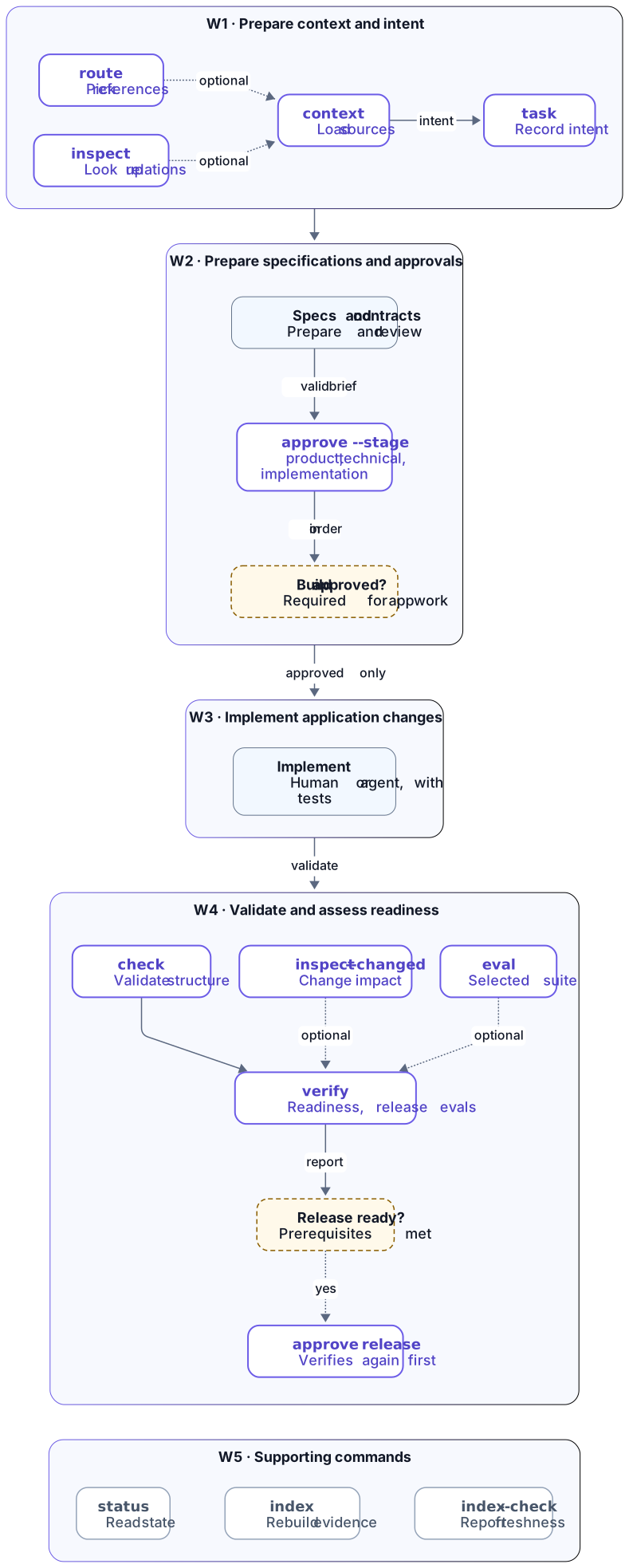
Workflow
A small loop for repeated agentic work.
Spectra is not another project-management system. Its job is to keep repo facts, task intent, validation, and release readiness close to the code.
Project workflow
spectra onboard                                   # capture project intent
spectra context --role planner --goal discover    # bounded context for planning
spectra task --item TASK-001 --task-type feature --goal "Describe the change"
spectra context --role implementer --goal implement --route-task "Describe the change"
spectra inspect <id>                              # what governs this subject, and why
# ... read and edit the code ...
spectra verify --test-target <test-target-id>     # run one test target, record evidence
spectra verify --explain <id>                     # verified, failed, stale or unverified?
spectra verify --gate review --changed            # may review proceed?
spectra check
spectra status
Agents execute. Spectra resolves, governs, traces and verifies project knowledge. context selects only the rules,
requirements and modules a task touches, within a token budget, and
inspect --changed reports what a set of changed files
concerns. Use approvals, evals and the release gate
(verify --gate release) as needed for each project.
verify without flags aggregates release-readiness
signals. It does not run your application's tests. Test evidence has a scope. A passing test target supports only the requirements that declare it with verifiedBy. Updating or migrating is a
separate lifecycle: spectra update only updates the
application on your machine, and spectra migrate
changes a project only when you ask.
context refreshes the summary caches. task replaces the implementation brief. eval writes the latest reports. verify also recomputes the approval validity and runs the release evals. Configured command-mode evals may execute application commands. See command effects for exact paths and modes.